The world of fashion continues to face scrutiny. Fast fashion – rapid production and consumption cycles and marketing tactics that encourage impulsive buying, steering consumers toward pieces that don't last more than a season – is one culprit.
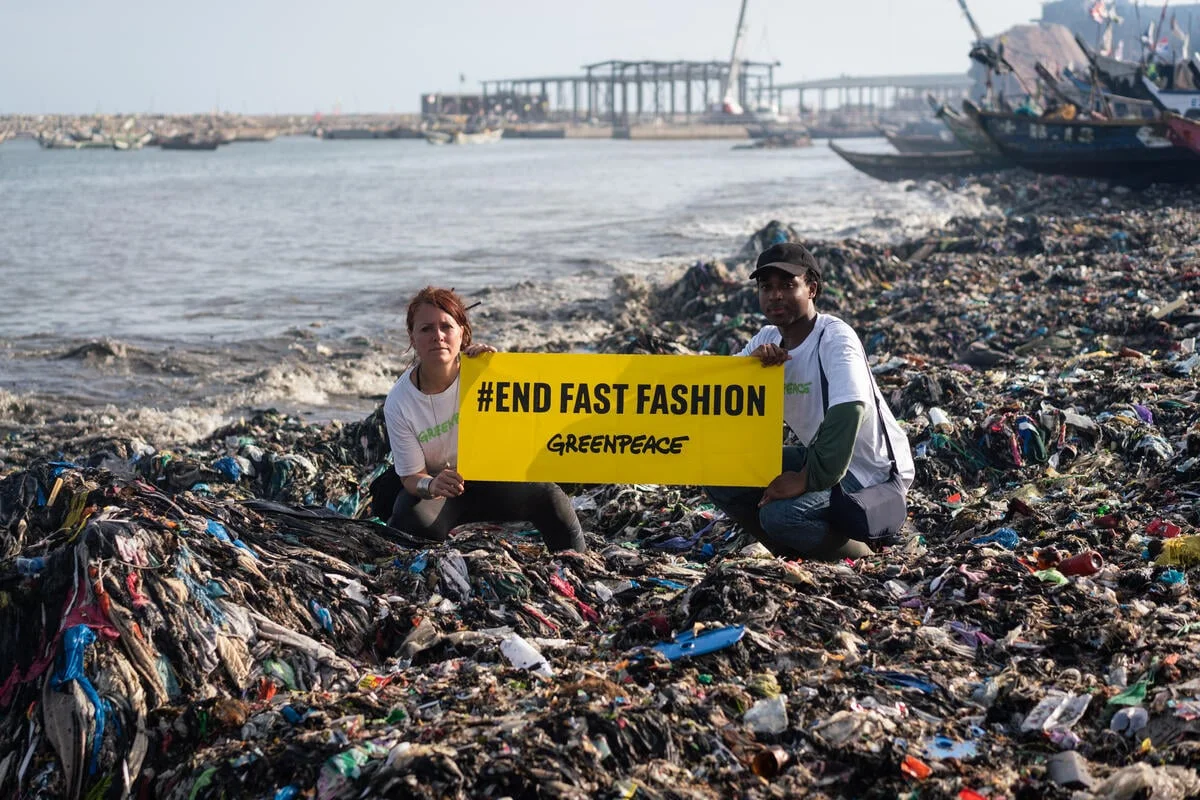
Greenpeace activists calling to end fast fashion.
Building a sustainable, long-term commercial system within fashion is complex. Companies must balance environmental responsibility and financial viability. Supply chain transparency (ethical sourcing and production) is tough to maintain in an increasingly globalized system, where the designing company is far from the factory, raw material supplier, or recycling facility, making oversight even harder.
Slow fashion has another problem – it's rarely sexy. As misconceptions and greenwashing abound, purchasing options become difficult to decipher. In the past, sustainable fashion could mean high price tags and limited choices. Companies must look beyond the Greenpeace, mother earth angle and cultivate a fresh, distinct mindset. Brand story and business strategy go hand in hand. Embrace cost-saving benefits in the long term – reduce energy consumption and reinvest in the overall economy. If workers are local and paid a fair wage, it's likely they will spend more, giving them the power to invest.
The philosophy behind reuse, recycle, and compost is called the circular economy. A fascinating blend of traditional methods and green technological advancements will likely carry us through the next wave of progress. Imagine a world where we are able to reuse waste on a massive scale, capturing pollutants and turning them into energy rather than biodiversity killers.
With some runway fashion houses dialing back circularity plans or failing to meet targets, it falls increasingly to independent brands, government regulators, and non-profit groups to lead the way.
Shein, the mega distributor known for bargain-bin prices on new styles, questionable ethics, and daily drops is ignoring consumer protection laws according to the Consumer Protection Cooperation (CPC) Network. They are accused of pushing fake discounts and providing deceptive or false information about the sustainability of their products. France's government took action, passing a bill that enforces environmental surcharges on fast fashion, restricts marketing, and attempts to improve operational environmental transparency.
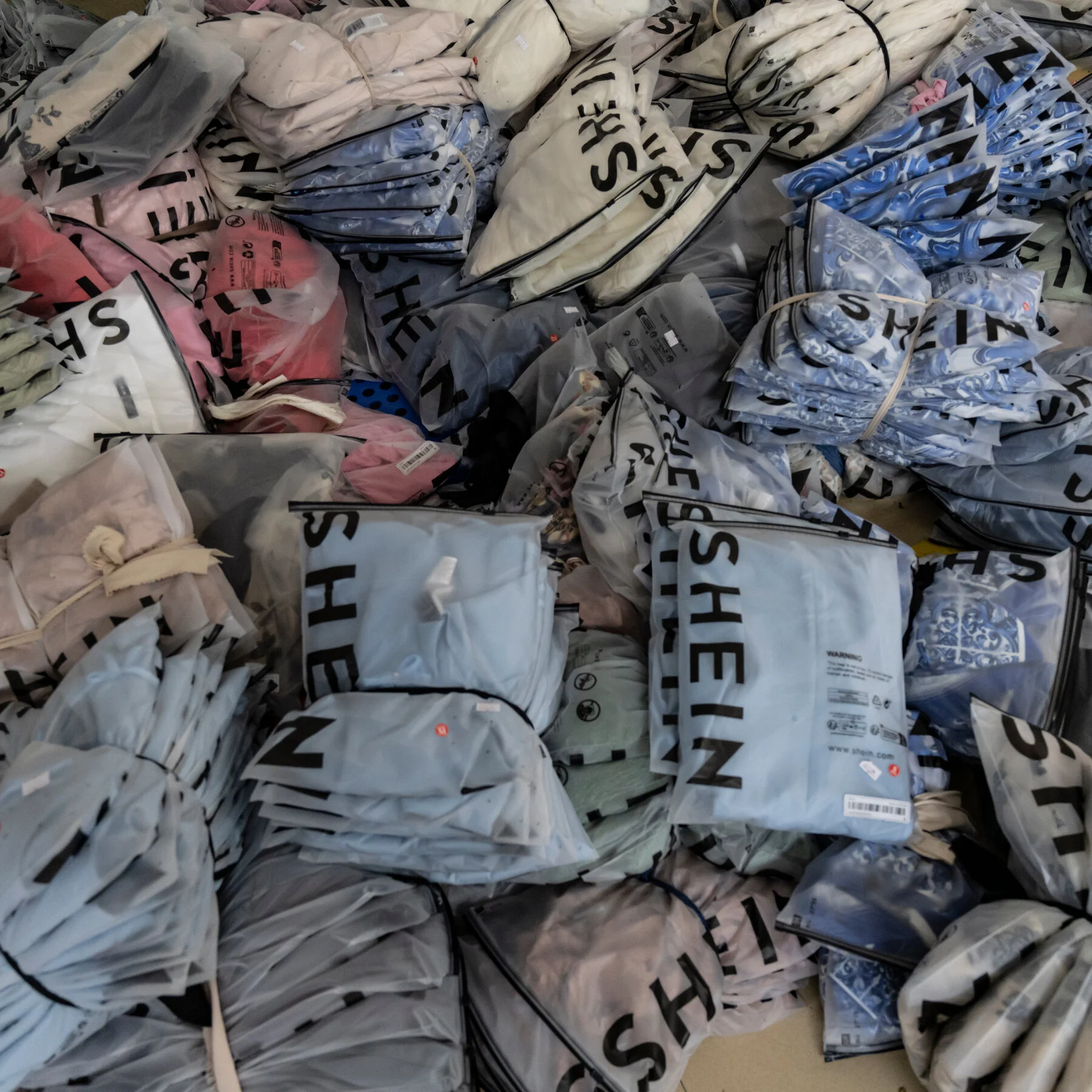
Individually packaged Shein garments illustrate the scale and waste of ultra fast fashion.
The Intersection of Sustainable Fashion and Art
Art and fashion have always entwined. The annual Met Gala is one example, bringing celebrated artists and emerging designers together, surrounded by fine art. While recent trends focused on upcycled and vintage styles, the event has faced criticism for a lack of sustainable designs in the past. Stella McCartney expressed her frustration with the industry's seemingly oblivious attitude to The Guardian in 2017, saying it's "incredibly wasteful and harmful to the environment." The Environmental Protection Agency (EPA) claimed at least 11 million tons of waste from these sectors head to landfills in the US each year alone.
It's exciting to see the level of creativity that comes with striking pieces that sparkle on the runway, but what about consumers who crave ready-to-wear, eye-catching styles that feel comfortable at the office or coffee shop? The challenge: marry design and utility to affordability with little environmental impact. It's much easier to produce a limited-run capsule collection using deadstock or repurposed fabric than it is to develop full apparel lines with thread sourced ethically and fabrics developed with intent.
How Sustainable Fashion Brands Can Weave the Maker’s Story into Their Brand Narrative
Storytelling is a powerful tool. Sharing your entire production story from raw material to transportation, energy use, and packaging. Understanding the complete development process, from material sourcing to transportation, is key. Translate the lifecycle of your product into a story that educates and inspires the consumer.
Go beyond static images. Pop-ups, collaborations, and interactive experiences that highlight how items are produced, the people involved in the journey, and stats explaining why these choices are environmentally friendly. By showing the value behind each mini-story in an engaging way, you give the consumer a chance to connect. Share a compelling narrative that leaves your customer ready to buy a wardrobe staple they will want to reach for every week.
Each story needs to translate cohesively across marketing channels. End-to-end campaigns ideated around a strong theme, built-into your brand from day one. Keep messaging simple and creative.
Let's break it down.
Craftsmanship and Ethical Commitment
• Fair and ethical: low wages, long hours, and unsafe working conditions face many of the 75 million plus employed in the garment industry – affecting women and children predominantly, women accounting for over 60% of the workforce according to the International Labour Organization.
• Keep your mission in accordance with UN Sustainable Development Goals, like ensuring sustainable production patterns.
• Learn from traditional and low-impact textile techniques. There is opportunity to preserve both cultural heritage and environmental health while investing in local communities when operating outside of first-world countries. Pursuing craftsmanship and process over a quick return minimizes human and environmental costs.
How to do this: Vet the facility in person or use factories and recycling facilities close to where you work. It's often overlooked, but NYC isn't just a design hub, it's a manufacturing center too! Many cities offer tax breaks, grants, and other financial incentives for producing locally, so consider looking into that as well.
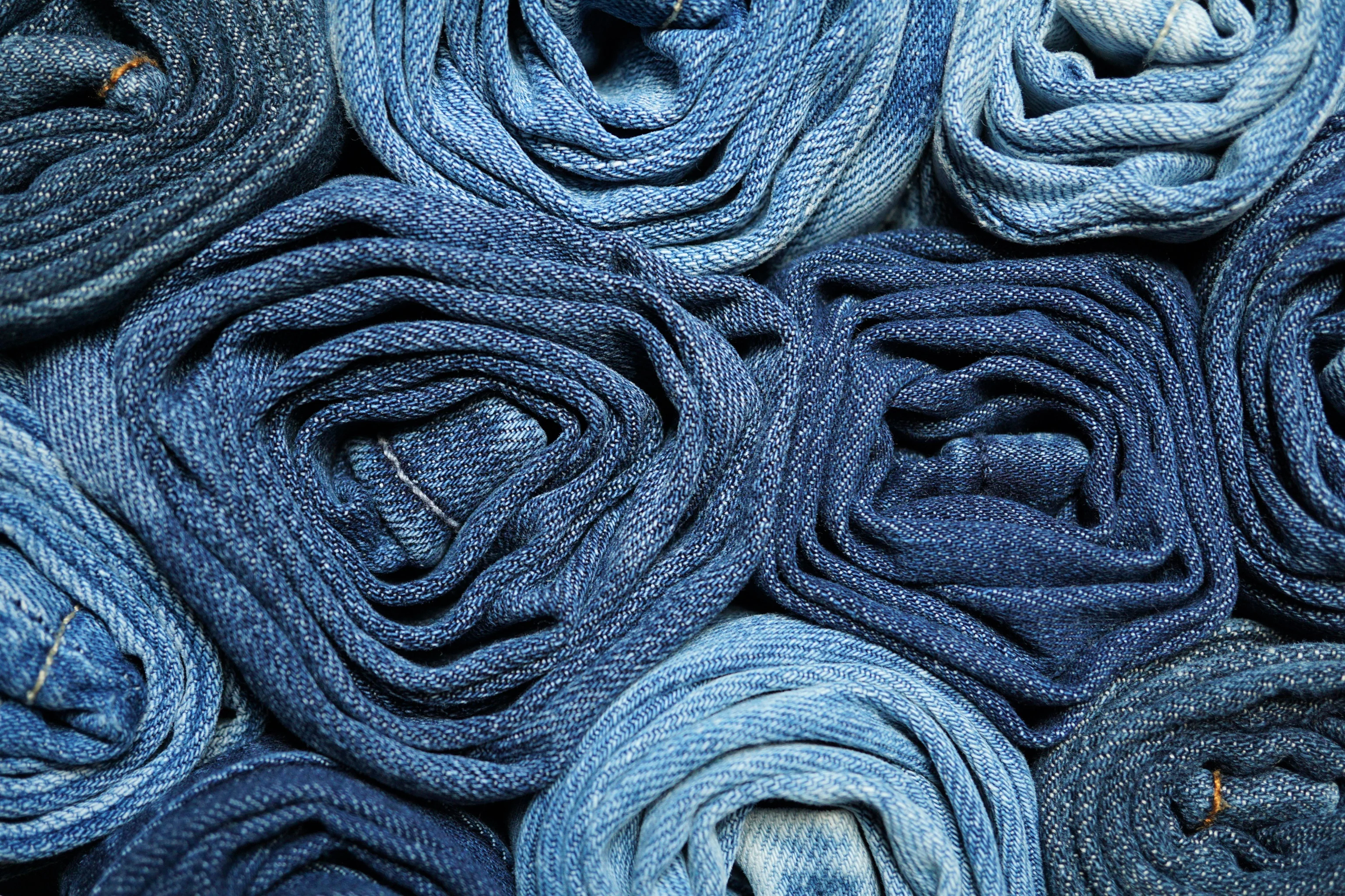
Rolled denim in different shades of blue, evoking recycled and upcycled jeans.
Limiting Waste and Resource Usage
• Chemical use in the manufacturing process is one of the leading causes of waterway pollution. Dyes and fabric treatments sometimes contain toxins that are flushed into local rivers and creeks. Waterless dying, skipping the whitening process, and digital printing help reduce this – inks made from algae and environmentally neutral ingredients are gaining popularity. Pesticides used during growing are contributors as well, which highlights the urgent need to transition to organic agriculture. Finding ways to filter and reuse water using clean energy should be a priority, as tech improves. New research finds rosemary wax could be a viable waterproofing alternative to chemical-based resins. GOTS (Global Organic Textile Standard) and OKEO-TEX certifications assist in establishing a certain amount of transparency in this category.
• Reducing the amount of fabric scrap generated on the production line. It's difficult to adhere to a zero-waste model, but finding ways to recycle or reuse the leftovers is possible.
• The Ellen MacArthur Foundation estimates the textile industry contributes "...more than international flights and maritime shipping combined" to greenhouse gas emissions. Consider how much fuel is needed in each step, from harvesting organic crops to recycling polyester. Transportation, servers for e-commerce stores – there are so many energy-intensive points throughout the chain.
How to do this: There are numerous ways to cut back on energy use or make better choices.
Looking for suppliers/growers that farm organically or are already certified is step one.
If you aren't using natural fiber, partnering with a company or that that produces a durable recycled material would be best. Experimenting with ways to repurpose scrap yourself is ideal – and may be profitable if you turn it into new product.
Fabric and Material Choice
• How will the product be reused at the end of its lifecycle? Take into account that some fabrics can be broken down with fewer chemicals and less stress to the environment. Another advantage: single fiber organics like cotton and hemp are also biodegradable.
• Blended textiles, sometimes made with petrochemicals, can be challenging to recycle. Separating the fibers is difficult due to their molecular makeup. Previously, this required even more exposure to harsh chemicals, but new methods like hydrothermal treatment show promise without the need. Instead of turning hard to treat material into new clothing (fiber-to-fiber recycling), it would become lower-grade non-wearables such as decor, cleaning products, or insulation.
• Circulose has collaborated with known designers and indie brands to manufacture new garments with 100% recycled material.
• Innovative materials like mushroom leather (mycelium), Tencel, and synthetics made from reclaimed fish nets are a few examples of how far we've come in finding eco-friendly solutions. Pineapple leaves can even substitute shoe leather. O2 Monde is a shoe and accessories brand on the cutting edge.They source not only from pineapple – but plant remnants discarded after the wine making process, cactus leaves, and orange byproduct. Using pineapple fiber to produce wearables is nothing new. At least as far back as the 1800s, people indigenous to the Philippines were weaving shirts using this type of thread.

Gold heels made with pineapple-based Piñatex, a plant-based alternative to leather.
• CirculART, a project of Cittadellarte–Fondazione Pistoletto and parent of Cashwool, advocates circularity and new approaches to supply chain issues, giving designers space to explore techniques and perspectives on how to reuse. Cashwool promotes the idea that merino wool can be a year-round fabric, even in warm climates. These products are a far cry from the wool swimming suits of the 19th century. Modern technology is ushering in a new generation of performance fabric. Yarn treated with H2DRY is said to be 7% more breathable, and wool is regenerative with a low environmental impact.
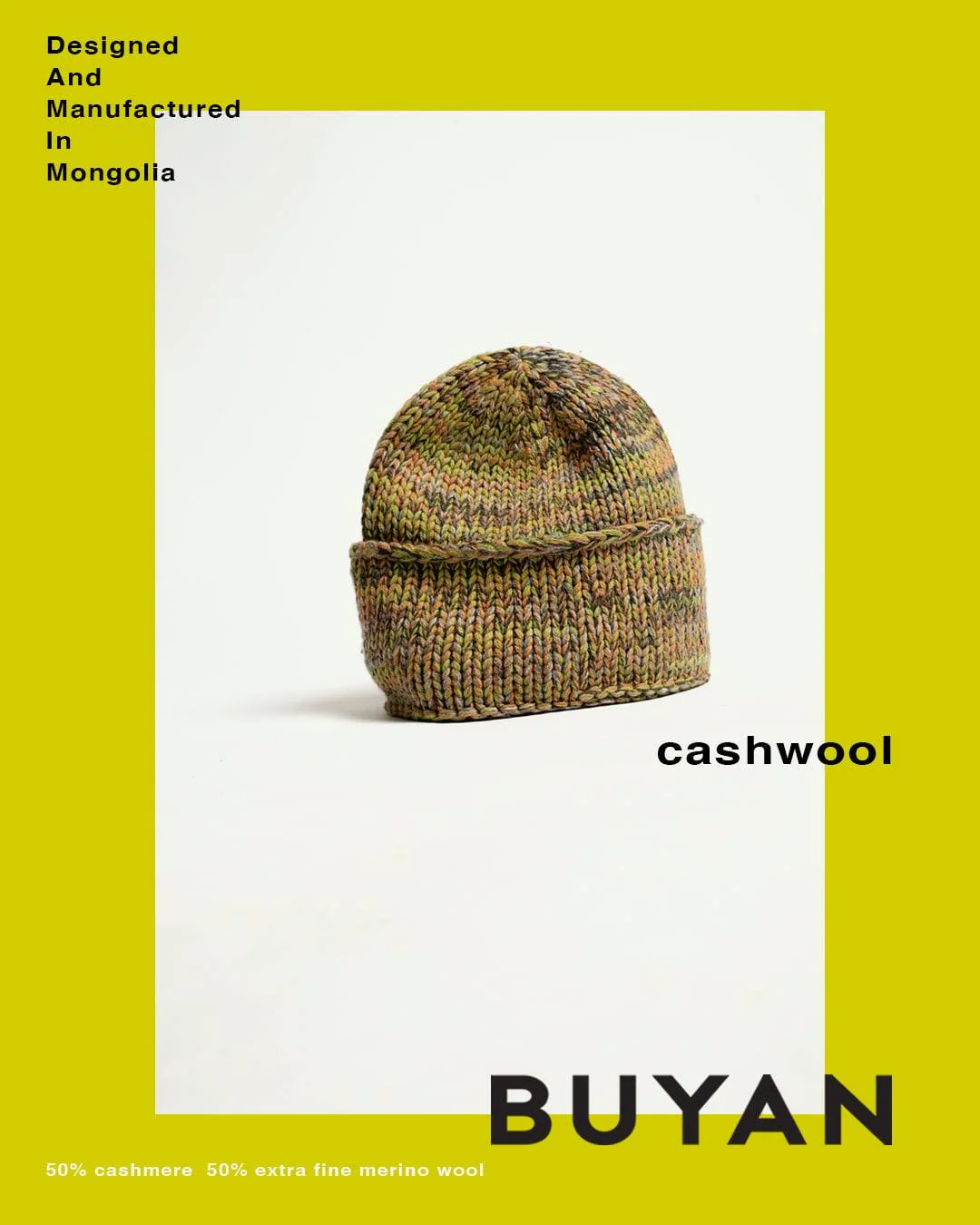
Cashwool beanie by BUYAN, designed and manufactured in Mongolia.
How to do this: Sometimes, you won't be able to source a ready-made, dyed fabric to suit your needs. Turn this potential setback into an opportunity and work directly with a mill to develop your own fabric. Material innovation gives you more control over the process and brings exclusivity to your finished collection. Making this an integral part of your brand voice can help emphasise why your product is better – giving you a competitive edge.
Manufacturing, Tech, and Forecasting: Emphasizing Quality Over Quantity
• Technology can improve the workflow and supply chain efficiency dramatically. Print-on-demand manufacturing (POD) allows businesses to keep costs low and eliminates the need for massive inventory levels, reducing the amount of scrap and manufacturing waste.
• Designers must take an active role in the process as well, working the functional disassembly of the end product into every piece––consider fabric that is not only created sustainably, but easily repurposed or broken down, melding with the circular ideology. Refashion, a software program developed by MIT CSAIL and Adobe, is taking this approach by encouraging designers to think modularly.
• Understanding your supply chain holistically is crucial to planning and growth. AI, blockchain, and forecasting tools can assist, and several companies offer internationally recognized certifications. Positive Luxury, an EU-based platform designed to help businesses self-assess and map sustainability goals along with their partners, has a suite of services including the Butterfly Certification and Digital Product Passport guidance. The DPP, part of the Ecodesign for Sustainable Products Regulation, will become mandatory in 2026 for most brands within the eurozone. The new rules hope to increase transparency and accountability.
Bluesign measures the social and environmental footprint of brands and offers a level of assurance to consumers, while Fairtrade and B Corp oversee multiple industries.
Incorporating Circularity: Reuse and Recycle Programs
• Estimates suggest roughly 20% of discarded textiles are collected for reuse or recycling. If we hope to increase that number, we need to take inspiration from cultures around the world. In Japan, the Boro technique was used for hundreds of years to artistically repair heavy-wear items by layering strips of discarded fabric. Playing again on the theme of modularity – Japanese kimonos for children were designed with extra fabric tucked into pleats, then let out when necessary, rather than restitching or replacing.
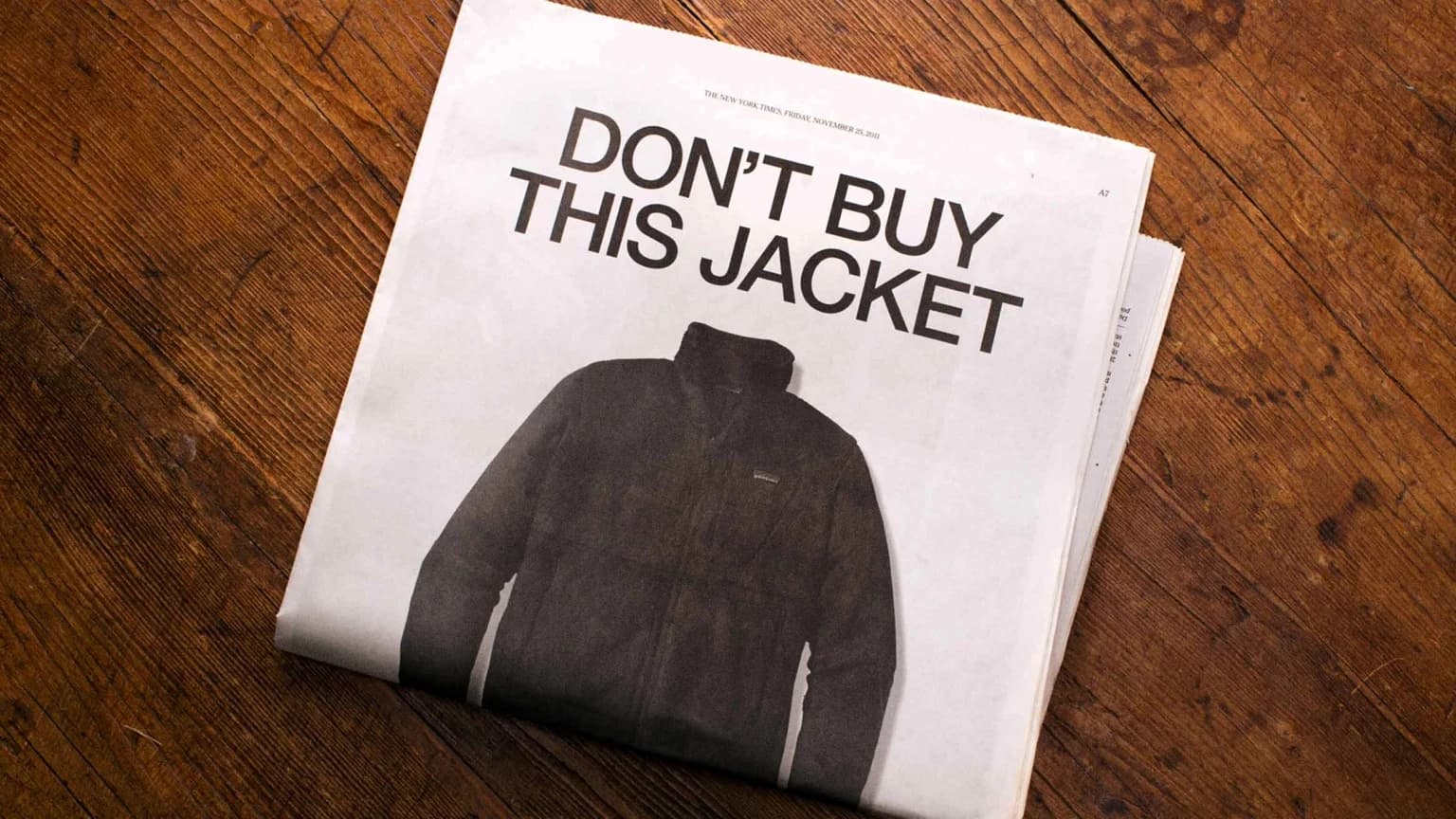
• Many companies are aiming to cut landfill waste by implementing in-house recycling programs, like Levi's and Patagonia. Patagonia is a pioneer in making sustainability a part of its brand story. The recent “Don’t Buy This Jacket” campaign takes a creative approach to advertising, asking potential customers to evaluate their habits while encouraging use of the repair service.
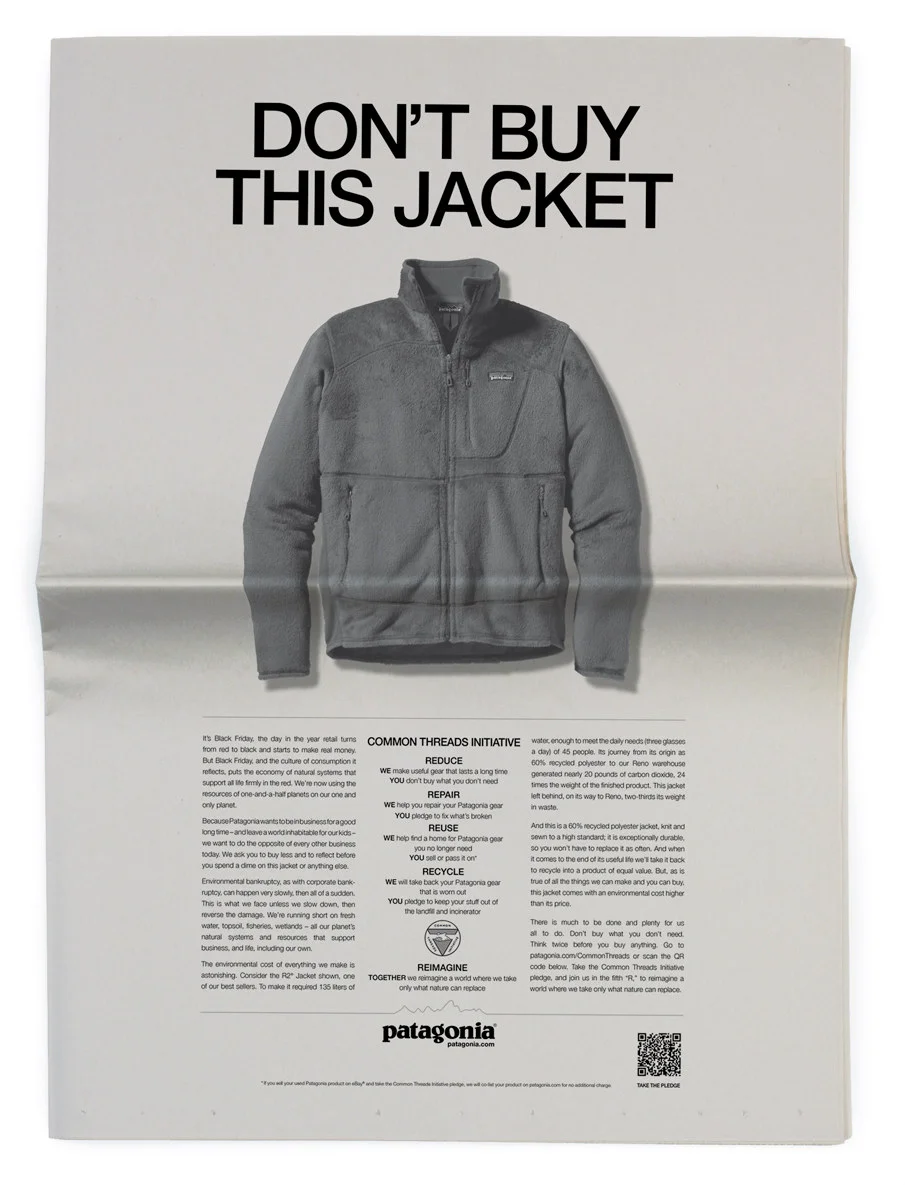
Patagonia’s “Don’t Buy This Jacket” campaign, encouraging consumers to buy less and repair more.
• The Recommerce Caucus, launched by US Congressional representatives in 2025, aims to support sellers of pre-owned items, at both a state and federal level, encouraging circularity. It won the approval of e-seller platforms like eBay and Poshmark. Recommerce is expected to reach $1 trillion globally by 2035.
How to do this: Make sure your customers have easy access to the info. If you can handle all of the reuse/recycle in house, go for it. If not, encourage customers to take ownership on your website, socials, and email – where they can resell or recycle with trusted partners.
A Sustainable Fashion Future: From Storytelling to Circularity
It's important to remember that most brands aren't going to check every box, at least not initially. Sustainability is an evolution, and there isn't always clear consensus on what counts as progress. Paraphrasing a member of Eileen Fisher's sustainability team, it's difficult to prioritize what will make the most significant impact. Is keeping waterways clean and air pollutant-free more important than fair wages? That's not a call most thought leaders are anxious to make. New materials bring concerns over durability, which sounds another question: If the product wears faster, is it truly more sustainable?
The struggle for consumers remains – many consider themselves conscious of their choices, with an interest in shopping sustainably, but less than half actually follow through consistently. Share data you've gathered with your audience so they can understand the impact they are making, the time and effort involved in finishing each piece, the true cost of production, and importance of closing the loop.
The push for positive impact needs to come from brands and purchasers alike. Supporting local industry and recycling programs is crucial, as partnerships with like-minded businesses and NGOs can help curb the financial burden for independent businesses and reinforce the concept of circularity as a lifestyle. But it doesn’t end there. Each piece of clothing carries the story of its creation, the artisans involved, and the communities impacted by the brand's practices.